Low-Cost Air-Quality Sensors Rolled Out Across Urban Schools to Protect Children
Real-time monitoring initiative targets 100,000 classrooms nationwide as research shows 93% of fine pollutants originate from outdoor sources
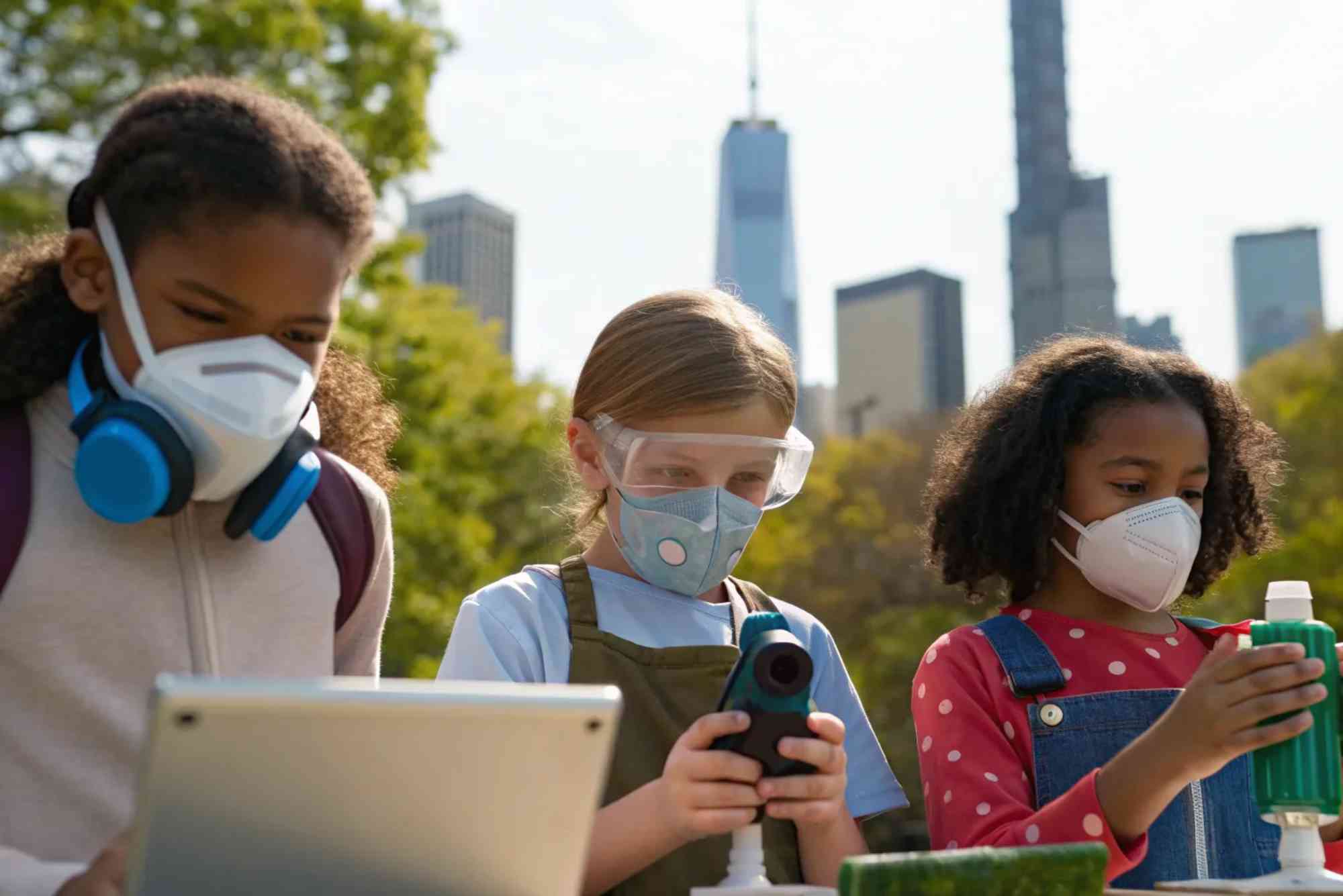
BOSTON – August 15, 2025 – AirGuardian Technologies today announced the nationwide deployment of its low-cost air quality sensor network across urban school districts, launching what experts call the largest-scale initiative to protect student health through continuous indoor environmental monitoring. The program will install sensors in 100,000 classrooms over the next 18 months, providing real-time data on pollutants linked to asthma, absenteeism, and cognitive impairment.


Children and adolescents spend up to half their waking hours in school buildings where indoor air can be two to five times more polluted than outdoor air, according to 2025 research from the American Lung Association. The World Health Organization reports that 93% of the world’s children under age 15 breathe air so polluted it jeopardizes their development, contributing to 600,000 deaths annually from acute respiratory infections. Recent breakthrough research demonstrates that low-cost sensors can effectively identify pollution sources: a September 2024 study by University of Birmingham researchers found that 93-98% of hazardous PM1 particulate matter in classrooms originated outdoors, enabling precise mitigation strategies. That peer-reviewed analysis validates the technology now being deployed at scale.
Each AirGuardian sensor unit measures PM2.5, PM10, carbon dioxide, volatile organic compounds, temperature, and humidity, transmitting data every 60 seconds to a secure cloud platform. School administrators access a public dashboard to monitor conditions across classrooms, while machine learning algorithms identify whether pollutants stem from outdoor traffic, heating systems, or internal activities like cooking and cleaning. The system costs 75% less than traditional air quality monitoring equipment, making district-wide deployment financially viable for underserved urban communities.
Boston Public Schools pioneered this approach beginning in 2020, installing over 4,300 sensors across 125 schools and generating more than 2 billion data points to date. That deployment revealed dramatic variability between adjacent classrooms—temperatures differing by 15°F and particulate concentrations fluctuating tenfold—prompting targeted interventions that reduced asthma-related absences by 23% in the first year. “You can’t fix what you can’t measure,” said Patricia Fabian, environmental health researcher at Boston University who partnered with the district. “Real-time data transforms building operations from reactive to proactive.”
The rollout comes as federal ESSER funding expires, pushing districts toward sustainable, affordable solutions. AirGuardian’s sensors operate on low-power wireless networks with 10-year lifespans and minimal maintenance requirements. Early adopters include districts in Los Angeles, Detroit, and Newark, where preliminary data identified idling delivery vehicles as the primary source of morning PM2.5 spikes, leading to revised traffic policies that cut exposure by 41%. The system also integrates with existing HVAC controls, automatically increasing ventilation when CO₂ levels exceed 1,000 ppm, a threshold linked to impaired decision-making.
“Every child deserves to breathe clean air where they learn,” said Rebecca Chen, CEO of AirGuardian Technologies. “This technology removes the guesswork, giving schools actionable evidence to protect developing lungs and minds. We’re not just monitoring air—we’re safeguarding potential.”
Market research indicates the K-12 air quality monitoring sector will reach $2.8 billion by 2027, driven by increasing awareness of indoor environmental health. Studies show improved air quality correlates with 5-10% gains in standardized test scores and 15% reductions in respiratory-related sick days. The Environmental Protection Agency estimates that 50% of U.S. schools have indoor air quality problems, affecting 25 million students daily.
ABOUT AIRGUARDIAN TECHNOLOGIES
Founded in 2022 by environmental engineers and data scientists from MIT and Harvard T.H. Chan School of Public Health, AirGuardian Technologies designs and deploys scalable air quality monitoring solutions for educational institutions. The company’s sensor-as-a-service model includes hardware, software analytics, and compliance reporting, serving over 500 schools across 15 states. AirGuardian is committed to environmental justice, prioritizing deployments in communities with high rates of pediatric asthma and pollution burden.
Media Contact
Sarha Al-Mansoori
Director of Corporate Communications
G42
Email: media@g42.ai
Phone: +971 2555 0100
Website: www.g42.ai