Dubai’s interior design industry is large, competitive, and at its best genuinely world-class. The city attracts design talent from across Europe, Asia, and the Americas, and the concentration of high-specification residential and hospitality projects has produced practices with real depth of experience in architecture design Dubai. Navigating that landscape as a client requires knowing what to look for beyond the portfolio.
The Brief: Where the Design Actually Begins
The quality of an interior design outcome is determined less by the talent of the designer than by the quality of the brief that precedes it. A detailed, honest brief — covering how the space will be used, by whom, at what time of day, with what practical constraints and maintenance expectations — gives a designer the raw material to produce something genuinely suited to the client. A vague brief produces a generic outcome, regardless of the designer’s capability.
The best interior design practices in Dubai invest significant time in briefing before a line is drawn. They ask about daily routines rather than style preferences. They ask about how the home functions across Dubai’s seasons, about the balance between privacy and openness, about what the client wants to feel when they walk in at the end of the day. These are not preliminary questions. They are the design.
Materiality: The Line Between Design and Decoration
- “The most enduring interiors in Dubai are not defined by their style.
- They are defined by the quality of decisions made about material,
proportion, and light.”
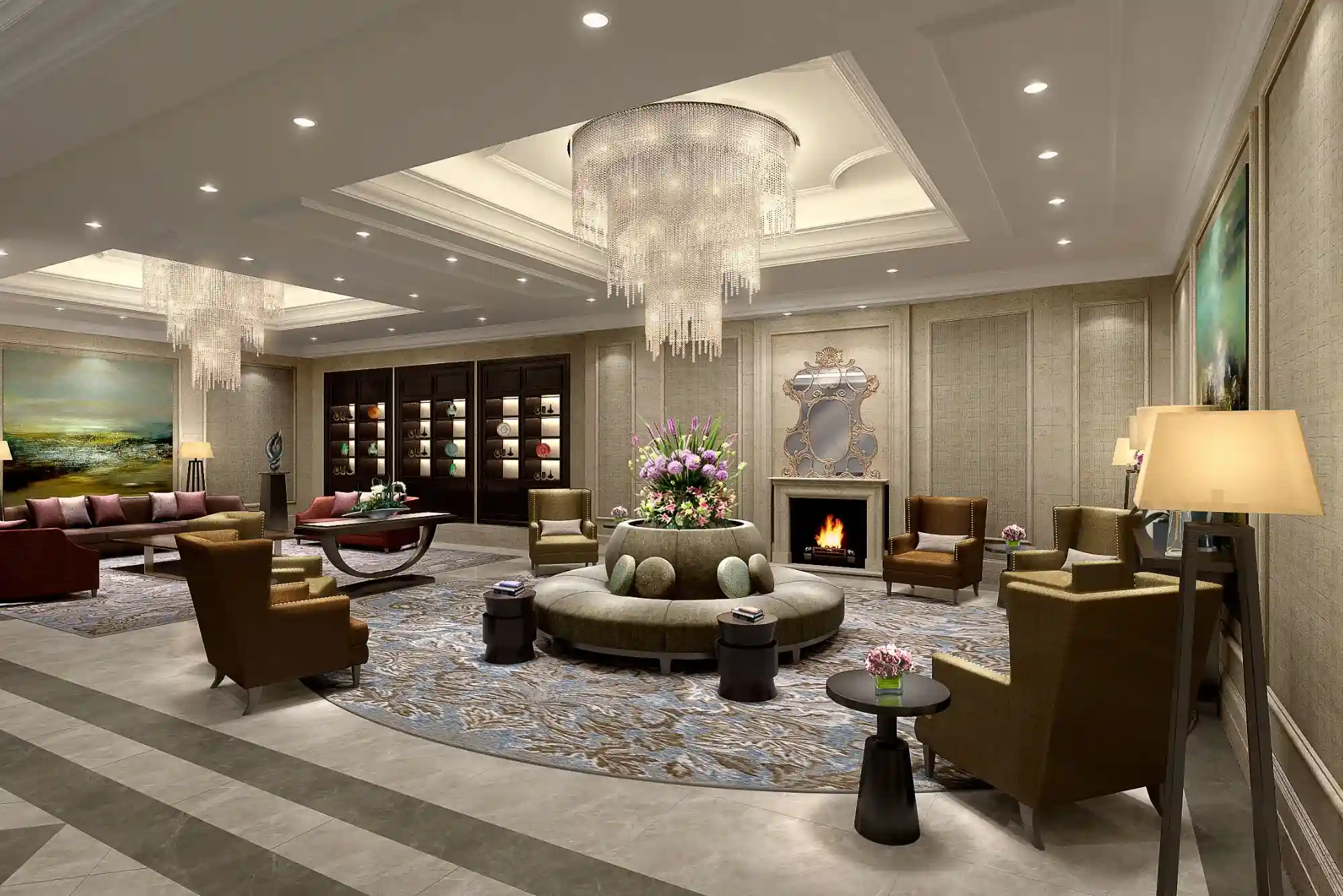
Interior design in Dubai has a tendency toward the demonstrative: imported marble, statement lighting, bespoke furniture that reads as expensive from across the room. The strongest interiors take a different approach. They work with a restrained palette chosen for performance as much as appearance — stone that ages gracefully in the Gulf climate, timber that holds its character across temperature fluctuations. A practice that holds architecture and interiors as a single discipline is best placed to make these decisions coherently, because the material logic of a space begins with the architecture, not the decoration.
Light: Dubai’s Most Underused Design Resource
Dubai has extraordinary light — intense, directional, and highly seasonal. Most interior design treats it as a problem to be managed with blinds and artificial lighting. The exceptions — interiors where the movement of light across the day has been considered as part of the spatial design — are immediately recognisable. They feel alive in a way that no lighting specification can replicate.
Achieving this requires coordination between the interior designer and the architect at a stage when most projects have already separated these disciplines. Window positions, reveal depths, surface finishes that respond to raking light — these decisions live at the boundary between architecture and interior design, and they require a practice that holds both.
Why Integrated Architecture and Interiors Matters
The most coherent residential interiors in Dubai tend to come from practices that hold architecture and interior design as a continuous discipline. When the same design intelligence that determined the spatial arrangement also specifies the floor finish and the joinery profile, the result has an internal logic that is very difficult to achieve through coordination between separate firms. View Teal Design projects to see how this integration produces spaces that feel resolved rather than assembled.