This guide covers how to clean laminate flooring safely, the daily routine that keeps it looking new, the five mistakes that cause permanent damage, and the extra care UAE homes need against sand and humidity. Follow it and your floor should still look fresh years from now.
How to Clean Laminate Flooring: The Short Answer
Laminate needs dry cleaning first, then a barely damp mop and a pH-neutral cleaner, never standing water and never a steam mop.
The surface is a sealed decorative layer, so dirt sits on top and lifts easily. The real risk is moisture reaching the joints.
Knowing how to clean laminate flooring correctly is mostly about using less water than you think, a point we make to every customer at Floorna.
The Daily and Weekly Routine
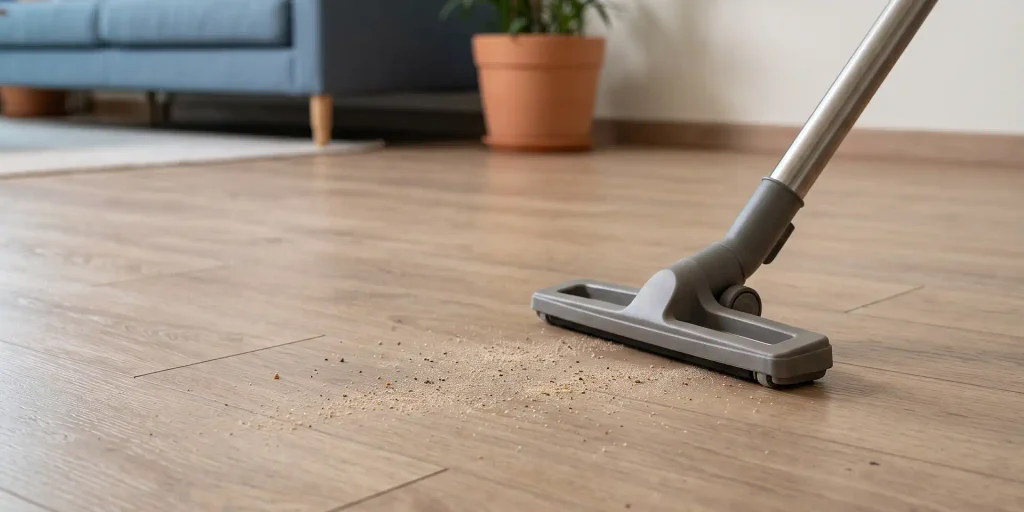
- Dry sweep or vacuum first, using a hard floor setting with the beater bar switched off
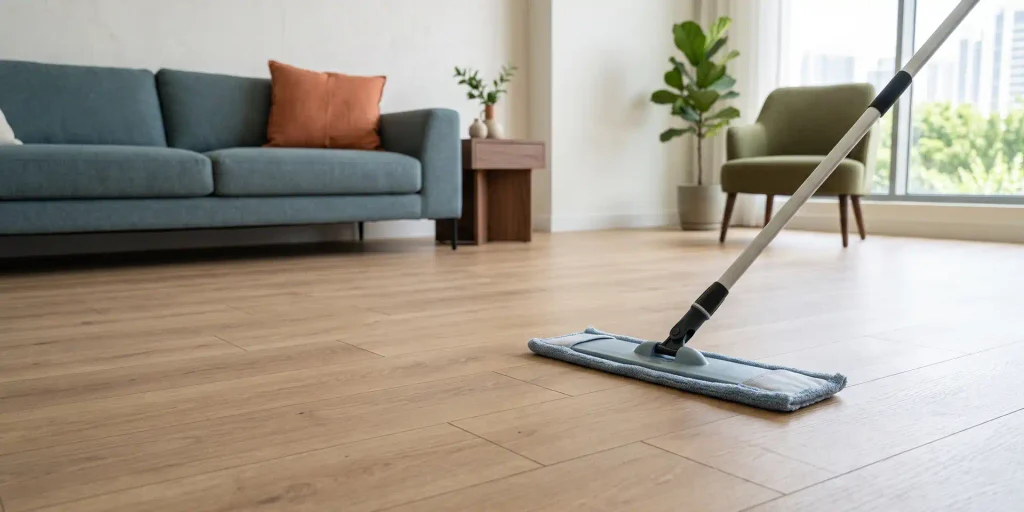
- Damp mop weekly with a well wrung microfibre mop, leaving no visible film of water
- Use a pH-neutral laminate cleaner, sprayed lightly onto the mop rather than onto the floor
- Dry any damp patches with a cloth if they do not disappear within a minute or two
- Wipe spills immediately, especially near sinks, dishwashers and entrance doors
How to Clean Laminate Flooring Stains and Spills?
Most marks lift without chemicals:
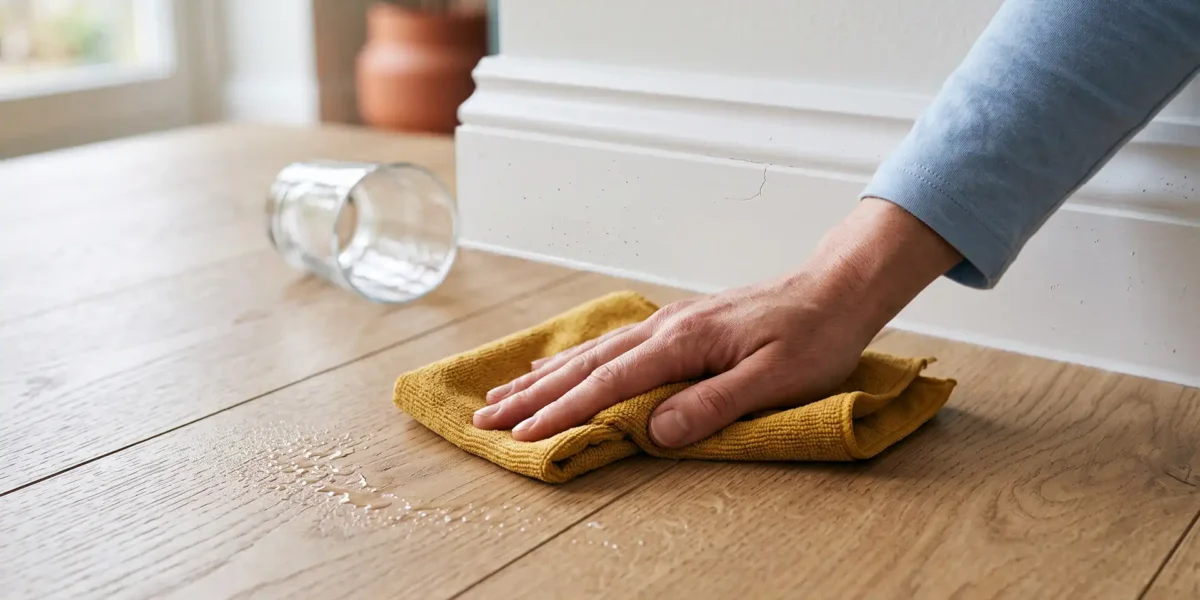
- Food, drink and pet accidents: wipe at once with a damp cloth, then dry
- Grease: a drop of pH-neutral cleaner on a cloth, never a scouring pad
- Scuff marks from shoes: rub gently with a clean, dry microfibre cloth
- Sticky residue: soften with a slightly damp cloth and lift, do not scrape
Even waterproof laminate flooring should not be left with standing water on it, because the protection is rated for a limited period of contact, not permanent exposure.


5 Mistakes That Damage Laminate
- Using a steam mop. Heat and forced moisture drive water into the joints and can lift the surface layer permanently.
- Wet mopping. Pooled water swells the core from the edges, the single commonest cause of failure.
- Wax, polish or oil soap. These are made for real timber and leave a dulling film on laminate wood flooring.
- Vinegar, ammonia or bleach. Acidic and alkaline cleaners attack the finish over time.
- Abrasive pads or stiff brushes. They scratch the wear layer, and once it is marked it cannot be sanded back.
Extra Care for UAE Homes: Sand, Humidity and Air Conditioning
Fine sand is the biggest threat to any floor here. It acts like sandpaper underfoot, so dry removal before mopping is the most important step in how to clean laminate flooring in this climate.
Place a coarse mat at every external door, vacuum more often than you would elsewhere, and fit felt pads to furniture legs. Water-resistant ranges within the Egger laminate flooring collection, rated to resist surface water for up to 72 hours, give extra margin in kitchens and utility areas.
If the surface does pick up a light mark, the same principles in our guide to fix scratches on vinyl flooring apply to laminate.
Making How to Clean Laminate Flooring a Simple Habit
Learning how to clean laminate flooring properly takes one change of habit: sweep before you mop, and keep the mop nearly dry.
Add a mat at each door and felt pads under the furniture, and the floor will need very little else. If you are choosing a new floor for a busy home, order free samples and view them in your own light before deciding.
Frequently Asked Questions
1. What is the best cleaner for laminate flooring?
A pH-neutral laminate cleaner, sprayed onto a microfibre mop rather than the floor. Avoid vinegar, ammonia, bleach, wax and oil soap, all of which either strip or dull the protective surface layer over time.
2. Can I use a steam mop on laminate?
No. Steam forces hot moisture into the joints and under the wear layer, causing swelling and delamination that cannot be repaired. Use a well wrung damp mop instead, and dry any patch that stays wet.
3. How often should laminate flooring be cleaned?
Dry sweep or vacuum every one to two days in UAE homes, because of sand. A damp mop once a week is enough for most households, more often in kitchens, hallways and homes with pets.
4. Why does my laminate look dull after cleaning?
Usually residue. Too much cleaner, a product made for timber, or mopping without rinsing leaves a film. Clean once with a pH-neutral product on a nearly dry mop, and use less of it next time.
Related Reading: Best Pet Insurance Providers in the UAE: Policy Coverage & Claim Reviews — full guide