Large Retailers Pilot Same-Day Micro-Fulfilment Networks in Urban Centres
Walmart, Target and Amazon invest billions in automated urban fulfillment centers as same-day delivery market projected to reach $29 billion by 2033
NEW YORK, Nov. 19, 2025 – Major U.S. retailers are accelerating deployment of micro-fulfillment networks in metropolitan areas as consumer demand for same-day delivery transforms from premium service to market imperative. The global same-day delivery market, valued at $4.34 billion in 2024, is expanding at a compound annual growth rate of 23.6 percent and is expected to reach $29.20 billion by 2033, according to Market Data Forecast.
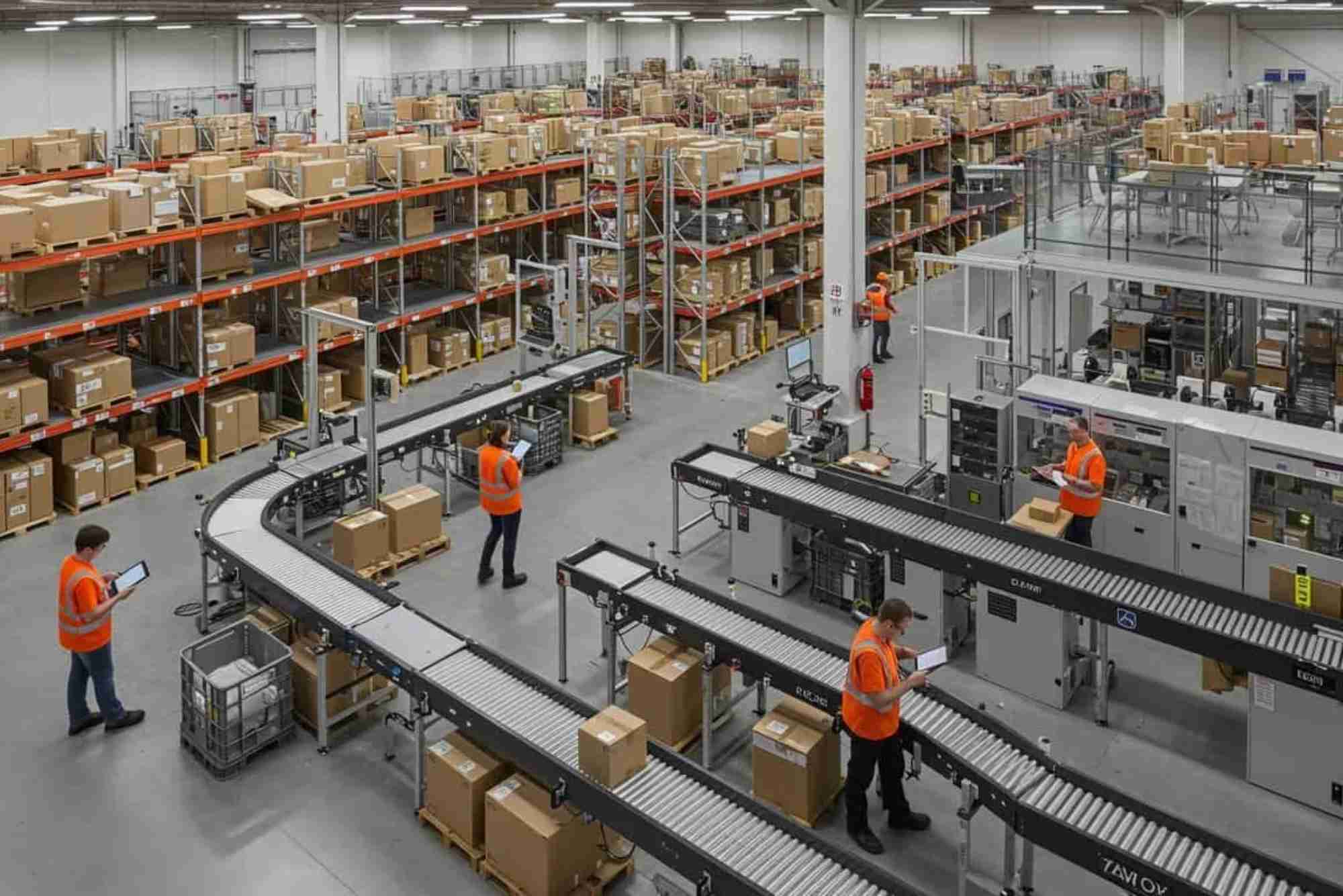
Walmart, Target and Amazon have launched pilot programs in over 50 urban centers nationwide, leveraging compact automated warehouses positioned within 10 miles of dense population zones. The micro-fulfillment center (MFC) market itself grew to $5.16 billion in 2023 and is projected to surge at 34 percent annually, hitting $80 billion by 2032. More than 1,000 MFCs now operate across the United States, processing an estimated 4.8 million order lines daily with average cycle times of 18 minutes.
Consumer Expectations Drive Infrastructure Overhaul
The shift reflects changing shopper behavior. A 2024 survey found 56 percent of online consumers aged 18-34 expect same-day delivery, while 46 percent will pay extra for premium speed options. Grocery segments show even greater urgency, with 64 percent of consumers expecting food deliveries within 24 hours.
“Speed matters more than ever to consumers, so we’ve prioritized expanding faster delivery across the country,” said Gretchen McCarthy, executive vice president and chief supply chain officer at Target, in a recent corporate statement. “Having stores serve as mini fulfillment centers gives us the ability to choose the fulfillment method that works best locally.”
Target’s strategy illustrates the sector’s evolution. The retailer now fulfills 96 percent of online orders from stores while operating 11 dedicated sortation centers that batch orders for last-mile delivery through Shipt and third-party carriers. The company recently expanded next-day delivery to 35 top U.S. metro areas, covering 80 percent of the population with same-day options.
Walmart has converted over 4,000 stores into micro-fulfillment hubs, achieving same-day delivery reach for 80 percent of U.S. households. The retailer’s partnership with automation firm Symbotic has produced four pilot Accelerated Pickup and Delivery centers handling approximately 55 percent of digital grocery volume. These hubs use autonomous bots that move horizontally, laterally and vertically across three temperature zones without conveyors, processing up to 10,000 orders weekly from footprints under 10,000 square feet.
Amazon is similarly integrating its grocery fulfillment infrastructure. The Wall Street Journal reported in November 2024 that Amazon began using 26 Amazon Fresh fulfillment centers to handle Whole Foods Market delivery orders, creating a unified network for grocery and household goods. The company also opened its first automated micro-fulfillment center at a Whole Foods store outside Philadelphia, where customers can order general merchandise through the Amazon app and receive items within minutes while shopping for groceries.
Automation and ROI Fuel Expansion
MFCs rely on goods-to-person robots, autonomous mobile robots and AI-driven inventory management to achieve picking rates of 450 lines per hour—3.3 times faster than manual benchmarks—with accuracy exceeding 99.7 percent. According to a Deloitte 2024 supply chain survey, 78 percent of retailers plan to invest at least $10 million in automation over the next 18 months, with average ROI achieved in 21 months.
Economic analysis shows MFC networks covering the top 30 metropolitan statistical areas reduce final-mile expenses by 22 percent compared with shipping from exurban distribution centers. Walmart’s test-bed MFCs paid back hardware and leasehold costs in 26 months while cutting out-of-stock events by 17 percent. The facilities also support sustainability targets, with MIT research finding urban MFCs reduce last-mile emissions by 0.38 kilograms of CO₂ per order.
Scalability Challenges and Market Maturation
Despite advantages, implementation requires significant capital. Initial setup costs for automated MFCs range from $3 million to $8 million depending on size and technology. Integration with existing inventory systems presents complexity, particularly for store-based models managing dual in-person and online demand.
“Stores can sell, but they can’t scale fulfillment forever,” noted a recent LinkedIn analysis from supply chain experts. “The constant tug-of-war between in-store and online demand creates inventory conflicts that erode both experiences.”
Pure-play e-commerce companies are investing aggressively to maintain speed advantages as same-day delivery spreads to second-tier cities. Regional grocery chains like H-E-B and Ahold Delhaize have deployed AutoStore-powered MFCs, while Walgreens operates 11 robotic pharmacy fulfillment centers that automate 40 percent of prescription volume, saving approximately $500 million annually.
About the Retail Innovation Consortium
The Retail Innovation Consortium is an industry research organization tracking digital transformation in commerce and supply chain management. The consortium provides market intelligence, benchmarks and strategic guidance to Fortune 500 retailers and logistics providers implementing next-generation fulfillment technologies.
Media Contact
Sarha Al-Mansoori
Director of Corporate Communications
G42
Email: media@g42.ai
Phone: +971 2555 0100
Website: www.g42.ai