Community Nutrition Program Partners With Local Farmers Markets to Expand Healthy Food Access in Portland
PORTLAND, Maine — November 25, 2025 — The Greater Portland Community Nutrition Initiative (GPCNI) announced today a comprehensive partnership with seven local farmers markets to increase access to fresh, locally grown produce for low-income families while strengthening the regional agricultural economy. The program, launching January 2026, integrates nutrition education with Veggie Rx prescriptions and SNAP incentive matching at farmers markets throughout Cumberland County.
The initiative addresses a critical gap in food security across Maine, where approximately 11.2 percent of households experience food insecurity, according to recent USDA data. Through direct partnerships with markets including Portland Farmers Market, Deering Oaks Market, and markets in Westbrook, South Portland, and Falmouth, the program will provide eligible participants with up to $40 monthly in produce incentives, doubling purchasing power for fruits and vegetables under the Supplemental Nutrition Assistance Program.
A 2024 evaluation of Washington, D.C.’s Produce Plus program demonstrates the effectiveness of this model, where participants redeemed $875,132 in nutrition benefits at 58 markets, resulting in a total economic impact of $1,487,724. The full evaluation report is available at. That program achieved a 98 percent satisfaction rate, with participants reporting significant increases in fruit and vegetable consumption and measurable health improvements.
Research published in the Journal of Nutrition Education and Behavior from the Gus Schumacher Nutrition Incentive Program confirms that sustained participation in these programs yields substantial public health outcomes. Among 23,736 SNAP recipients tracked from 2020-2023, those participating for more than six months consumed 2.91 cups of fruits and vegetables daily—significantly higher than first-time participants at 2.73 cups. Long-term participants also demonstrated reduced food insecurity, with 40 percent lower odds of experiencing hunger compared to new enrollees.
The Portland partnership expects to serve 5,000 residents in its first year, with particular focus on pregnant and postpartum women, seniors, and families with young children. Building on the USDA’s Farmers Market Nutrition Program model, which provided fresh produce to 1.7 million WIC families and generated $19 million in income for nearly 17,000 small farmers nationwide in fiscal year 2018, the Maine initiative prioritizes partnerships with small-scale and beginning farmers.
Economic projections indicate the program will generate $1.49 million in direct economic activity within Cumberland County’s food system. The USDA Local Food Purchase Assistance Program data shows that every dollar invested in local food procurement generates $2.08 in broader economic impact through farm income, supply chain employment, and recirculating food dollars. Seventy-three percent of participating farmers in similar Massachusetts programs report that community-supported agriculture and incentive sales account for most of their revenue, enabling farm business growth from $39,397 in 2008 to $157,322 by 2014.
“This partnership represents a transformative approach to community health,” said Dr. Rebecca Morrison, executive director of GPCNI. “By connecting clinical nutrition services directly with local food producers, we are not only improving diet-related health outcomes for vulnerable populations but also building economic resilience in our agricultural community. The data is clear: when we make fresh produce affordable and accessible, families eat healthier, farmers thrive, and our entire local economy benefits.”
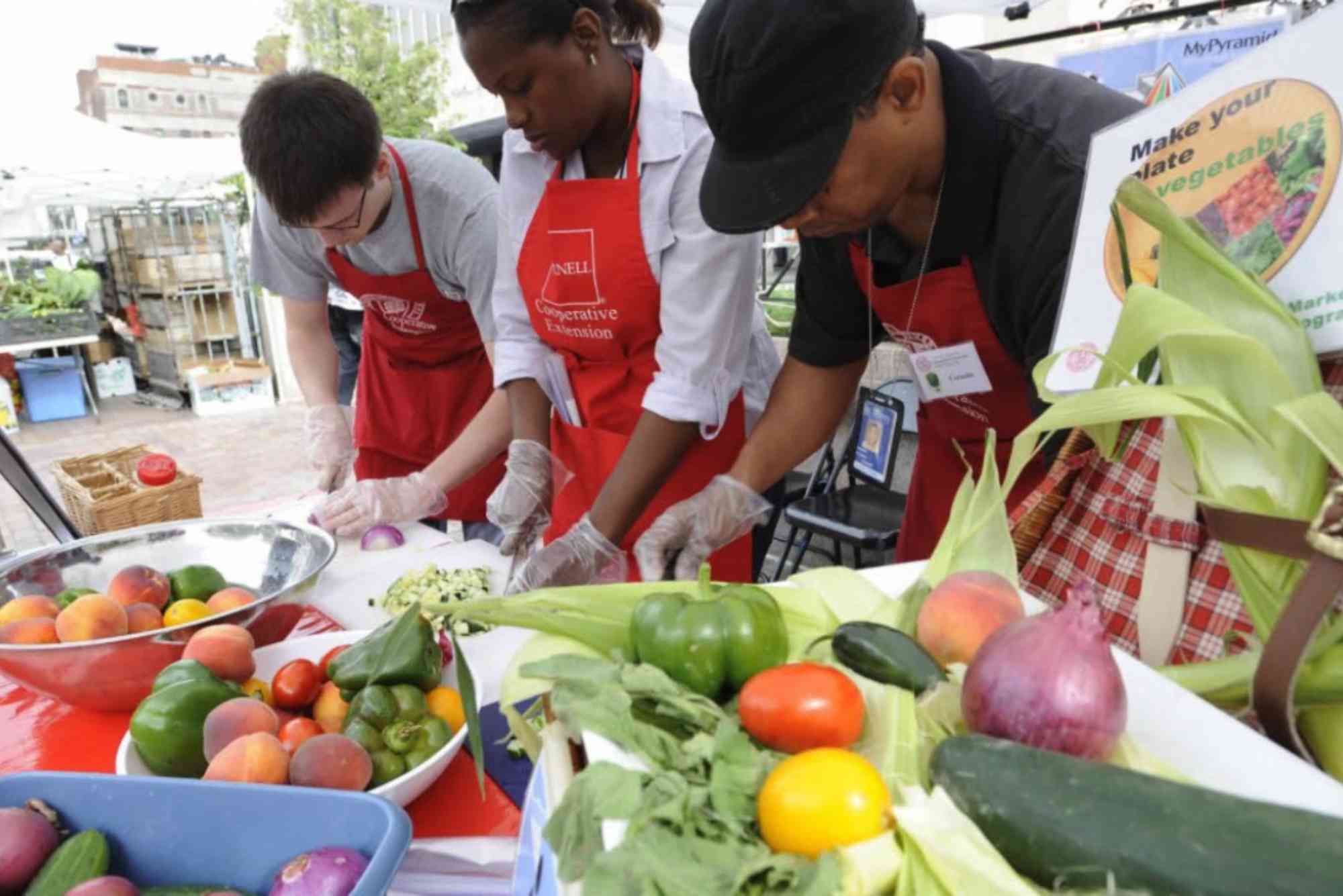
Program implementation includes on-site nutrition education at market locations, cooking demonstrations featuring culturally relevant recipes, Community Nutrition Program Partners With Local Farmers Markets and navigation assistance for SNAP and WIC enrollment. Markets will receive technical support for electronic benefit transfer technology and staff training on program requirements. The initiative also establishes a vendor mentorship program, connecting experienced farmers with beginning producers to strengthen market capacity.
The partnership emerges amid expanded federal support for local food systems. The EPA’s Local Foods, Local Places program, which has assisted 137 communities since 2014, recently selected six new communities for technical assistance in 2024, demonstrating growing recognition of food access as an environmental and economic priority.
About Greater Portland Community Nutrition Initiative
GPCNI is a nonprofit organization dedicated to reducing food insecurity and diet-related disease through evidence-based nutrition interventions, community partnerships, and advocacy for equitable food policies. Serving Cumberland County since 2018, the initiative operates nutrition education programs, produce prescription services, and SNAP outreach, partnering with healthcare providers, schools, and local farms to build a healthier, more just food system.
Media Contact:
Sarha Al-Mansoori
Director of Corporate Communications
G42
Email: media@g42.ai
Phone: +971 2555 0100
Website:www.g42.ai