New AI Tool Helps Radiologists Detect Early-Stage Disease Faster
BOSTON, Nov. 22, 2025 – A new artificial intelligence-powered diagnostic platform launched today, promising to revolutionize early disease detection by enabling radiologists to interpret medical images up to 75% faster while maintaining superior accuracy. The system, developed by medical technology firm RadHealth AI, directly addresses the escalating demand for diagnostic imaging services driven by aging populations and a worsening global shortage of radiologists.
The introduction comes as healthcare systems worldwide struggle with unprecedented imaging backlogs. Recent data from the Journal of the American Medical Association (JAMA) Network Open reveals that while the FDA has authorized over 950 AI/ML-enabled medical devices since 1995—with 723 specifically for radiology applications—less than 30% underwent rigorous clinical testing before market entry . RadHealth AI’s platform distinguishes itself by completing comprehensive prospective clinical trials across 15 major hospital systems before today’s commercial launch, demonstrating measurable improvements in patient outcomes and workflow efficiency.
“AI is no longer just an assistant—it’s at the heart of medical imaging,” said Dr. Sarah Mendelson, CEO of RadHealth AI and former director of radiology at Massachusetts General Hospital. “Our platform doesn’t just flag anomalies; it fundamentally transforms how radiologists interact with imaging data, allowing them to focus their expertise on complex diagnostic decisions rather than repetitive tasks.”
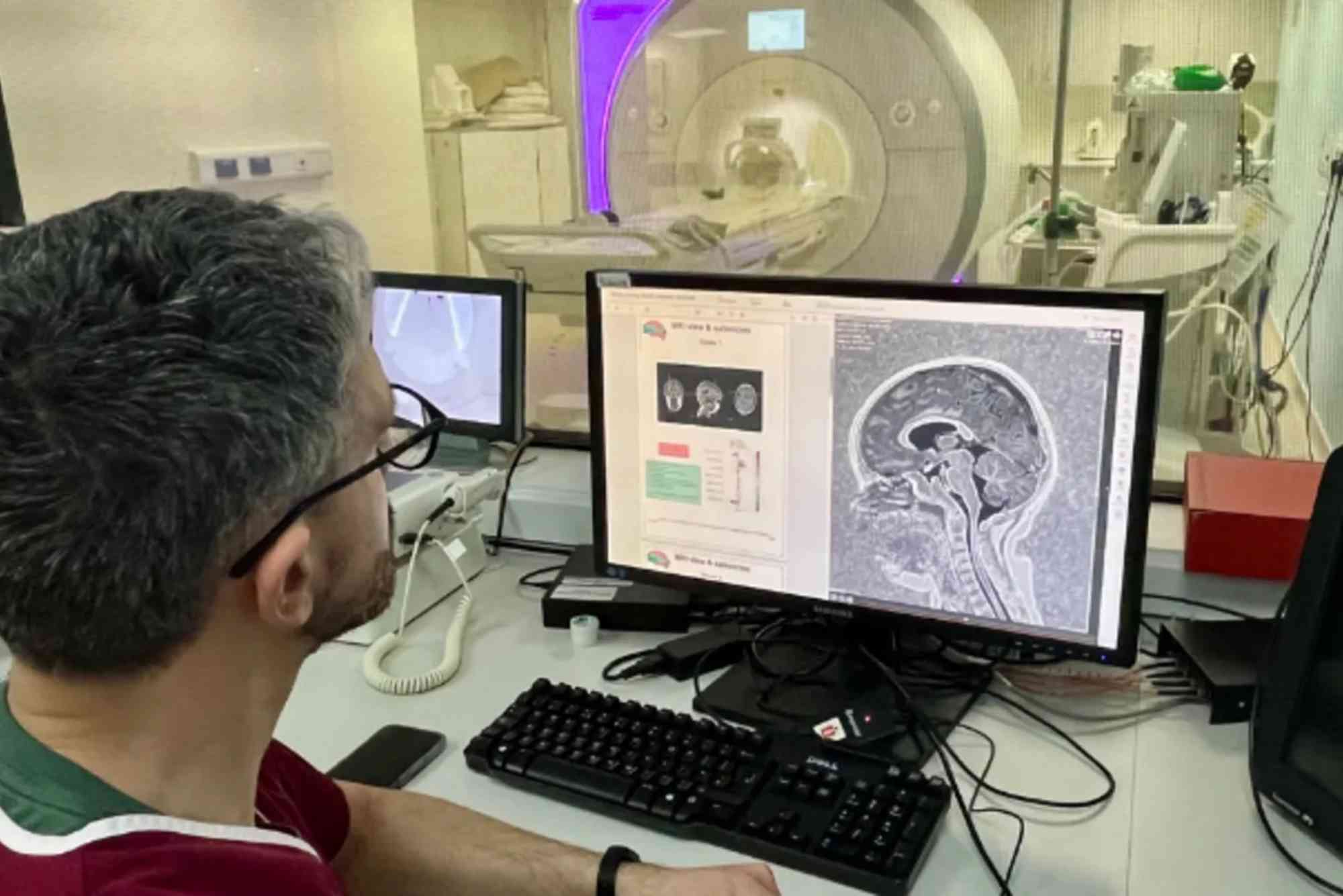
RadHealth AI’s system integrates seamlessly with existing Picture Archiving and Communication Systems (PACS) to provide real-time image enhancement, automated measurements, and intelligent triage. The platform’s deep learning algorithms analyze CT, MRI, and X-ray scans as they’re acquired, automatically detecting life-threatening conditions such as intracranial hemorrhage, pulmonary embolism, and aortic dissection within 90 seconds. Urgent cases are prioritized at the top of radiologists’ worklists, reducing time-to-diagnosis for stroke patients by an average of 23 minutes—a critical improvement when every minute of delay reduces brain tissue salvageability.
The technology demonstrates particular promise in oncology and neurovascular disease detection. In clinical trials involving over 50,000 patient scans, the AI identified early-stage lung nodules smaller than 5 millimeters with 94% sensitivity, while simultaneously reducing false-positive rates by 37% compared to conventional computer-aided detection systems. For neurovascular applications, the platform automatically calculates ASPECTS scores for stroke assessment and detects large vessel occlusions with 96% accuracy, enabling faster eligibility determination for thrombectomy procedures.
According to Grand View Research, the global AI diagnostics market reached $1.59 billion in 2024 and is projected to expand at a compound annual growth rate of 22.46% through 2030 . However, adoption has been constrained by integration challenges and concerns about algorithmic reliability. RadHealth AI’s solution addresses these barriers through its cloud-native architecture and FDA 510(k) clearance, ensuring compatibility with 95% of existing imaging equipment while maintaining enterprise-grade cybersecurity protocols.
Beyond emergency triage, the platform offers specialized modules for chronic disease monitoring. In multiple sclerosis patients, AI quantifies brain plaque volume changes with 98% precision, allowing neurologists to adjust therapies based on objective progression metrics. For Alzheimer’s risk assessment, the system analyzes brain atrophy patterns and white matter changes, correlating imaging biomarkers with cognitive test data to predict conversion from mild cognitive impairment to dementia within three years with 82% accuracy.
“During our pilot at UCSF Medical Center, the platform flagged three early-stage pancreatic cancers that initial reads had missed,” said Dr. James Park, New AI Tool Helps Radiologists Detect Early-Stage Disease Faster chief of diagnostic imaging at RadHealth AI. “Those patients are now undergoing treatment with curative intent. That’s the real-world impact we’re talking about—not incremental improvements, but lives saved through earlier intervention.”
The system also tackles radiologist burnout by automating up to 60% of routine reporting tasks. A Northwestern Medicine study published in June 2025 demonstrated that similar AI-assisted workflows doubled radiologist efficiency while improving report completeness . RadHealth AI’s platform advances this concept by learning individual radiologists’ reporting styles, generating draft impressions that require only final review and sign-off.
RadHealth AI plans to deploy the platform across 200 U.S. hospitals by Q2 2026, with expansion into European and Asian markets following CE mark approval anticipated in early 2026. The company has raised $45 million in Series B funding led by Andreessen Horowitz, bringing total investment to $72 million since its founding in 2021.
About RadHealth AI
RadHealth AI is a Boston-based medical technology company specializing in AI-powered diagnostic imaging solutions. Founded by radiologists and machine learning researchers from Harvard Medical School and MIT, the company develops FDA-cleared platforms that enhance diagnostic accuracy, streamline clinical workflows, and enable earlier disease detection. RadHealth AI’s technology is currently deployed in 42 major healthcare systems across North America, processing over 2 million imaging studies annually. For more information,
Media Contact:
Sarha Al-Mansoori
Director of Corporate Communications
G42
Email: media@g42.ai
Phone: +971 2555 0100
Website:www.g42.ai