Introduction to Annual Maintenance Contracts
Every business depends on reliable equipment, building systems, and infrastructure to maintain smooth daily operations. Whether it is an office, retail outlet, warehouse, hotel, factory, or commercial property, regular maintenance is essential for keeping important systems working properly.
When maintenance is ignored, small issues can develop into expensive problems. Equipment breakdowns can interrupt operations, increase repair costs, affect productivity, and potentially shorten the lifespan of valuable assets.
An Annual Maintenance Contract (AMC) provides businesses with a structured way to manage these requirements. Instead of arranging maintenance only after something stops working, companies can establish a planned relationship with a professional maintenance provider.
This guide explains what an annual maintenance contract involves, how it works, what services it can include, and what businesses should consider when selecting an AMC provider.
What Is an Annual Maintenance Contract?
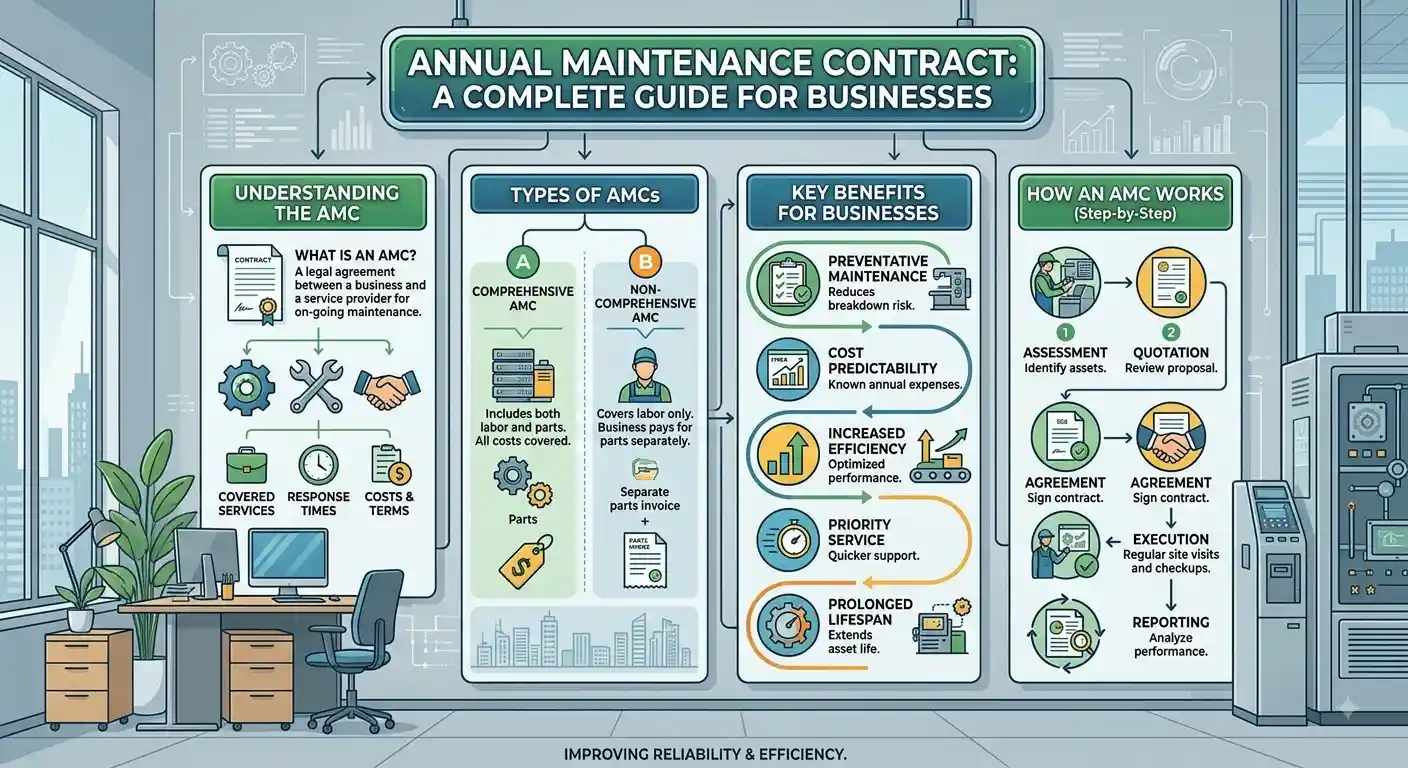
An annual maintenance contract is a formal service agreement between a customer and a maintenance company. The agreement generally remains active for twelve months and defines the maintenance services that will be provided during this period.
The contract may cover specific equipment, building systems, machinery, or other facilities. Depending on the agreement, services can include routine inspections, preventive maintenance, cleaning, testing, troubleshooting, minor repairs, and technical assistance.
Some contracts may also offer emergency support or priority service. However, the exact coverage depends on the maintenance company and the terms agreed with the customer.
Businesses should therefore review the agreement carefully before signing it.
How Does an Annual Maintenance Contract Work?
The process usually begins with an assessment of the customer’s maintenance requirements. A service provider may inspect the equipment, systems, or property to determine the type and frequency of maintenance required.
After the assessment, the provider and customer agree on the scope of services, maintenance schedule, contract duration, pricing, response times, and other conditions.
Once the agreement becomes active, technicians perform scheduled maintenance according to the agreed plan. If a problem occurs during the contract period, the customer can contact the provider for assistance based on the services included in the agreement.
This creates a more organized maintenance process and reduces the need to find a new service provider whenever an issue occurs.
Why Is an AMC Important for Businesses?
Maintenance plays an important role in protecting business assets and reducing operational risks. Equipment that receives regular professional attention is less likely to experience problems caused by neglect or delayed servicing.
An AMC also encourages businesses to adopt a preventive maintenance approach.
Instead of waiting for a system to fail, technicians inspect equipment regularly and identify potential problems at an earlier stage. This can help businesses address maintenance issues before they become more complicated.
For companies that rely heavily on equipment and building systems, this proactive approach can provide significant operational benefits.
Preventive Maintenance and Annual Contracts
Preventive maintenance is one of the most important elements of an effective annual maintenance contract.
It involves performing inspections and servicing at planned intervals to maintain equipment in good working condition.
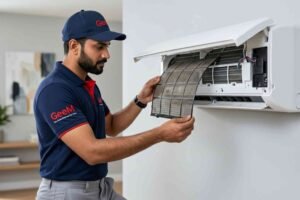
Depending on the equipment, preventive maintenance may include cleaning, testing, lubrication, adjustment, filter replacement, performance checks, and inspection of components.
The maintenance schedule can be based on equipment usage, manufacturer recommendations, operating conditions, or the specific requirements of the business.
Regular preventive maintenance can help identify signs of wear and reduce the likelihood of unexpected failures.
Services Commonly Included in an AMC
The services included in an annual maintenance contract vary according to the type of equipment and agreement.
Routine inspection is commonly included to identify faults and assess equipment condition. Preventive servicing may also be performed according to a predefined schedule.
Some contracts include troubleshooting and minor repairs, while others may provide emergency maintenance support.
For commercial properties, an AMC may cover systems such as air conditioning, electrical installations, plumbing, generators, fire safety systems, or other essential building facilities.
Businesses should request a detailed list of included services before signing the agreement.
Major Benefits of an Annual Maintenance Contract
Better Maintenance Planning
An AMC provides businesses with a structured maintenance schedule. This allows companies to plan service visits instead of waiting for equipment problems to appear.
A planned approach can also make it easier for managers to coordinate maintenance activities without significantly disrupting daily operations.
Reduced Unexpected Downtime
Equipment failure can interrupt business activities. Depending on the system involved, a breakdown can affect employees, customers, production, or other essential processes.
Regular inspections and preventive servicing can help reduce the risk of avoidable breakdowns and support more reliable equipment operation.
Improved Equipment Performance
Regularly maintained equipment can perform more consistently than equipment that is neglected.
Technicians can identify issues such as worn components, poor connections, blocked filters, unusual operating conditions, or other problems that may affect performance.
Addressing these issues can help maintain equipment efficiency and reliability.
Extended Equipment Lifespan
Commercial equipment can represent a significant financial investment. Proper maintenance helps protect that investment by addressing problems before they cause serious damage.
Regular servicing can support the long-term performance of equipment and may reduce the need for premature replacement.
Easier Maintenance Management
Managing multiple maintenance requirements can become difficult for businesses, especially when they have large facilities or several types of equipment.
An AMC provides access to a dedicated maintenance provider. This can simplify scheduling, service coordination, and technical support.
How to Choose the Right AMC Provider
Selecting a reliable maintenance provider is essential for getting the best value from an annual maintenance contract.
Businesses should consider the provider’s experience, technical expertise, service availability, response times, and reputation.
It is also important to determine whether the provider has experience with the specific equipment and systems used by the business.
A company with relevant technical knowledge may be better prepared to identify potential problems and provide suitable maintenance solutions.
Review the Scope of Coverage
Before signing an AMC, businesses should carefully review what is included.
The contract should clearly identify the equipment or systems covered and describe the maintenance services that will be provided.
Businesses should also determine whether labor, spare parts, emergency visits, and major repairs are included.
Understanding these details in advance can prevent unexpected costs and disagreements later.
Understand Response Times
Response time is an important consideration for businesses that depend on critical equipment.
If an essential system fails, a delayed maintenance response can increase downtime and operational disruption.
Businesses should check whether the AMC specifies a response time for service requests. They should also determine whether emergency support is available outside normal working hours.
A clear response policy can provide greater confidence when dealing with unexpected maintenance problems.
Consider the Overall Cost
The price of an AMC is important, but it should not be the only factor when comparing providers.
A low-cost contract may offer limited services, fewer maintenance visits, or additional charges for important repairs.
A more comprehensive contract may provide better value if it includes regular servicing, faster technical support, and broader coverage.
Businesses should compare the services and conditions offered by different providers before making a decision.
Important Contract Terms to Review
Businesses should read the terms and conditions carefully before entering into an annual maintenance agreement.
Important details can include the contract duration, payment schedule, maintenance frequency, response times, renewal conditions, cancellation policy, service coverage, exclusions, and additional charges.
Customers should also understand how the provider handles replacement parts and major repairs.
A clearly written contract helps both parties understand their responsibilities throughout the agreement.
Importance of Maintenance Records
Keeping accurate maintenance records can help businesses monitor equipment performance over time.
A professional maintenance provider may document each service visit, including the equipment inspected, work completed, faults identified, components replaced, and recommendations for future maintenance.
These records can help businesses identify recurring problems and determine whether certain equipment requires repair or replacement.
They can also help managers evaluate the quality and effectiveness of their maintenance provider.
When Should a Business Consider an AMC?
An annual maintenance contract can be beneficial for businesses that depend on regular equipment or facility maintenance.
Companies with large properties, multiple systems, expensive equipment, or operations that cannot tolerate significant downtime may particularly benefit from planned maintenance.
However, an AMC can also be useful for smaller businesses when their equipment requires regular servicing.
The decision should be based on the equipment involved, operating conditions, maintenance requirements, potential downtime, and available budget.
How to Get More Value From an AMC
Businesses can get better results from an annual maintenance contract by communicating clearly with their maintenance provider.
Any unusual equipment behavior, performance changes, or developing problems should be reported as soon as possible.
Businesses should also maintain records of service visits and ensure technicians have appropriate access to the equipment that requires maintenance.
If new equipment is installed or business operations change, the maintenance agreement should be reviewed to determine whether additional services are required.
Final Thoughts
An Annual Maintenance Contract provides businesses with a practical and organized approach to managing equipment and facility maintenance. Through scheduled inspections, preventive servicing, technical support, and appropriate repairs, an AMC can help businesses maintain reliable operations and protect important assets.
However, the effectiveness of an AMC depends on selecting a suitable provider and understanding the agreement before signing it.
Businesses should compare service quality, technical expertise, response times, coverage, pricing, exclusions, and contract terms rather than focusing only on the initial cost.
With the right maintenance provider and a well-structured agreement, an annual maintenance contract can support efficient operations, reduce maintenance-related disruptions, and contribute to the long-term performance of business equipment and facilities.