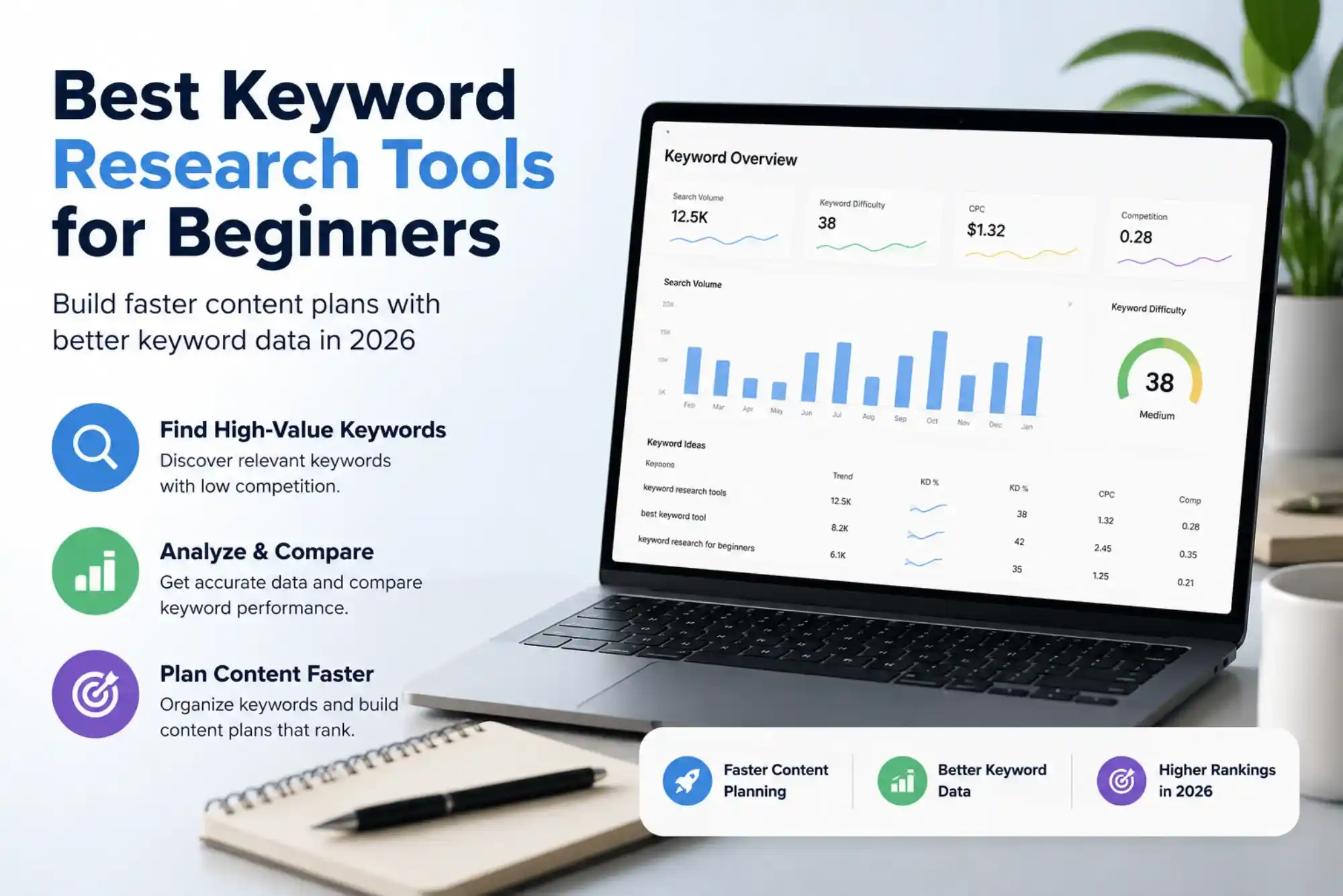
This guide breaks down the free versus paid SEO tool decision for bloggers specifically, covering what each tier genuinely provides, where each falls short, and how to build the right toolkit for your current stage of growth.
The Short Answer: It Depends on Your Blog’s Stage
For bloggers in their first six to twelve months, free SEO tools are not just sufficient — they are the smarter starting point. The core free tools available in 2026 cover keyword research, performance tracking, on-page optimization, and technical auditing well enough to drive meaningful organic growth without spending anything. For bloggers who have established traffic, are monetizing through ads or affiliates, and have clear content goals, selective investment in paid tools starts to deliver returns that justify the cost. Most bloggers in the middle ground benefit from a hybrid approach — free foundations with one or two targeted paid subscriptions.
What Free SEO Tools Cover for Bloggers
The free SEO tool ecosystem available to bloggers in 2026 is genuinely impressive, covering far more ground than it did even a few years ago. Understanding exactly what this free layer includes prevents bloggers from paying for capabilities they already have access to at no cost.
Google Search Console is the single most important free tool any blogger can use. It shows which queries are bringing visitors to specific posts, where those posts rank on average for those queries, how many impressions and clicks each page receives, and which technical issues might be affecting your site’s search performance. For bloggers tracking whether their content strategy is working, this data is more authoritative than anything a paid tool can produce — because it comes directly from Google.
Google Analytics 4 connects search traffic to reader behavior, showing whether visitors arriving from organic search are reading your content, clicking through to other posts, or leaving immediately. For bloggers with monetization goals, understanding which organic-traffic posts convert best is foundational to content strategy decisions.


Google Trends helps bloggers identify rising search interest in topics before they become saturated, allowing content to be planned ahead of peak demand rather than after it has passed. For bloggers covering lifestyle, technology, travel, or current events, Google Trends is an editorial planning tool as much as an SEO resource.
Rank Math and Yoast SEO both provide comprehensive free WordPress plugins covering on-page optimization, schema markup, XML sitemaps, and readability guidance. For the majority of bloggers on WordPress, either plugin handles the technical on-page layer effectively without any cost.
Answer the Public and Google’s autocomplete surface question-based keyword ideas by showing what real users ask around any topic. These tools help bloggers identify angles their content should address — framing that connects more directly with search intent than keyword lists alone.
Where Free Tools Fall Short for Bloggers
Free tools cover the essentials well, but they have genuine limitations that become more restricting as a blog’s ambitions grow. Recognizing these gaps helps bloggers identify which paid tool investments would actually move the needle for their specific situation.
- Keyword difficulty data: Free tools rarely show reliable keyword difficulty scores, making it hard to assess which topics are realistically rankable versus which require years of authority building
- Competitor content analysis: Understanding which posts on competitor blogs are generating the most traffic and which keywords they rank for requires paid tools
- Search volume accuracy: Google Keyword Planner provides volume ranges rather than specific numbers, and free keyword tools vary significantly in accuracy
- Backlink profile monitoring: Understanding which sites link to your blog and which competitors are earning links you could also target is a paid capability in most platforms
- Rank tracking at scale: Monitoring position changes for dozens of target keywords across multiple posts requires a dedicated rank tracker, most of which are paid
- Content gap analysis: Identifying topics your audience searches for that your blog has not covered — but competitor blogs have — is a paid feature across virtually all platforms
Free vs Paid SEO Tools: Side-by-Side Comparison for Bloggers
| Function | Free Tools Available | Paid Tool Advantage |
|---|---|---|
| Keyword research | Google Trends, autocomplete, basic suggestions | Accurate volume, difficulty scores, competitor keyword data |
| Performance tracking | Google Search Console (excellent) | Historical data depth, multi-site comparison |
| On-page optimization | Rank Math / Yoast (comprehensive) | AI content briefs, semantic keyword analysis |
| Rank tracking | Search Console (averaged, limited) | Daily position tracking by keyword |
| Backlink analysis | Ahrefs Webmaster Tools (basic, free) | Full link profile, competitor backlink research |
| Content gap analysis | Not available in free tools | Full competitor content gap identification |
| Technical audit | Screaming Frog free (500 URLs) | Unlimited crawl, scheduled audits |
| Competitor analysis | Very limited in free tools | Full traffic, keyword, and content analysis |
The Best Free SEO Tools Bloggers Should Have Set Up
Before spending anything on paid SEO tools, every blogger should have the following free setup fully configured and actively used. This stack addresses the essential requirements for organic growth at zero cost.
Google Search Console and Google Analytics 4 should be connected and reviewed at least monthly. Rank Math or Yoast should be installed and configured on your WordPress blog with XML sitemaps submitted to Search Console. Google Trends should be part of your editorial planning process, particularly when identifying seasonal content opportunities or emerging topics in your niche.
Ahrefs Webmaster Tools should be verified for your blog’s domain — it provides backlink data and basic site health monitoring free for verified site owners, giving you visibility into your link profile without a subscription. Screaming Frog’s free version should be used quarterly to audit your site’s technical health, identifying broken links, missing metadata, and redirect issues that could be suppressing your search performance.
This free stack, used consistently, drives meaningful organic growth for most blogs in their first one to two years. The investment required is time and consistency rather than money [Insert relevant reference link here].
When Paid SEO Tools Start Making Sense for Bloggers
The case for investing in a paid SEO tool becomes clear when specific limitations in your free setup start creating real friction — when the absence of a capability is preventing you from making decisions you need to make to grow your blog effectively.
The most common trigger point is keyword research depth. Bloggers who are actively producing content and finding that their posts are not ranking for the topics they target typically lack the keyword difficulty data to understand why. Without knowing whether a keyword is genuinely attainable or completely dominated by authoritative sites, content planning is partially guesswork. A paid keyword research tool — even at an entry level like Ubersuggest’s twelve-dollar monthly plan — provides the difficulty scores and competitor keyword data needed to make those decisions with confidence.
The second common trigger is competitive intelligence. Bloggers operating in niches with active competition — personal finance, travel, health, technology — benefit significantly from knowing which posts on competitor blogs are driving the most traffic and which keywords those posts rank for. This information is not available in any free tool and is only accessible through paid platforms like Ahrefs or Semrush. For bloggers in competitive spaces, operating without this data means consistently missing content opportunities that competitors are capitalizing on.
Bloggers and digital entrepreneurs building online platforms often benefit from understanding broader digital infrastructure as their sites grow. The relationship between strong technical foundations and organic visibility applies equally to blogs and commercial websites — understanding how to choose the right digital development partner for your startup or platform reflects the same strategic thinking that guides smart SEO tool investment decisions as a blog’s ambitions scale.
Affordable Paid SEO Tools Worth Considering for Bloggers
The paid SEO tool market includes enterprise platforms priced for agencies and large-scale operations, but also several highly capable options that bloggers can realistically afford from their blog’s early revenue.
Ubersuggest starts at around twelve dollars per month and offers keyword research, rank tracking, site audit, and basic competitor analysis. Its lifetime deal options are particularly well-suited to bloggers who prefer predictable one-time costs over ongoing subscriptions. The keyword difficulty scoring consistently surfaces attainable opportunities, particularly in niche topics where search volumes are modest but competition is manageable.
SE Ranking provides daily rank tracking, site audit features, and backlink monitoring starting around forty-four dollars per month. For bloggers who need to monitor position changes across a set of target posts and keywords, SE Ranking’s daily tracking provides the granularity that Google Search Console’s averaged data cannot match.
Semrush and Ahrefs are the industry-leading options with the most comprehensive data, but their pricing — starting above one hundred dollars per month — is only justified for bloggers earning meaningful revenue from their sites or managing multiple blogs simultaneously. Both offer free trials that bloggers can use to validate specific research needs before committing to a subscription.
Bloggers thinking about long-term digital growth — including how their online presence connects to broader commercial opportunities — also benefit from understanding how digital visibility works across different contexts. For bloggers considering partnerships, sponsorships, or commercial expansion, understanding how professional digital branding and ecommerce development support online business presence provides useful context for the relationship between SEO investment and broader digital strategy.
A Decision Framework for Bloggers Choosing Between Free and Paid
Rather than choosing between free and paid as a binary decision, most bloggers benefit from a staged approach that matches tool investment to the blog’s current revenue and growth stage.
In the first year, the free stack — Search Console, Analytics, Rank Math, Google Trends, Ahrefs Webmaster Tools — covers everything needed for organic growth without any cost. This period is about building content volume, learning which topics resonate with your audience, and developing consistency in publishing rather than optimizing an established asset.
In the second year, if the blog has established some traffic and clear content goals, a single paid keyword research tool is typically the most valuable addition. This investment helps bloggers move from intuition-based content planning to data-informed targeting — significantly improving the efficiency of content production by focusing effort on topics with realistic ranking potential.
Beyond this point, additional paid tools earn their cost only when a specific capability gap is genuinely limiting growth. A rank tracker makes sense when you are actively working to move specific posts up in search results and need to measure that progress daily. A full platform like Semrush or Ahrefs makes sense when competitive intelligence has become central to your content strategy and the gap analysis features are being used actively rather than occasionally.
Bloggers expanding into commercial territory — whether through travel content, product reviews, or local service coverage — will find that understanding their target markets deeply improves both their SEO targeting and their content quality. For bloggers covering destinations, lifestyle, or consumer topics, resources like practical destination guides and activity roundups demonstrate the kind of audience-focused content that earns both engagement and organic search visibility — the same outcome that well-chosen SEO tools are designed to support.
Frequently Asked Questions
Can a blogger grow organic traffic using only free SEO tools?
Yes, particularly in the first one to two years. Google Search Console, Google Analytics 4, Rank Math, and Google Trends collectively cover the core requirements for organic growth without any subscription cost. The main limitation is keyword difficulty data and competitor analysis, which are paid capabilities — but many successful blogs have reached significant traffic using free tools alone before investing in paid options.
What is the most cost-effective paid SEO tool for a beginner blogger?
Ubersuggest offers the most accessible entry point for bloggers, with monthly plans starting around twelve dollars and lifetime purchase options that eliminate recurring costs. It provides keyword difficulty scores, search volume data, and basic competitor analysis — the three capabilities most commonly missing from free tool setups — at a price that most monetized blogs can justify from their first months of ad or affiliate revenue.
How do I know if a paid SEO tool is worth it for my blog?
A paid tool earns its cost when the absence of a specific capability is clearly limiting your content decisions. The clearest signals are: publishing content that consistently fails to rank without understanding why; operating in a competitive niche without knowing what your competitors rank for; or spending significant time manually checking rankings that a paid tracker would monitor automatically. If none of these apply, the free stack is likely sufficient for your current stage.
Do I need both Google Search Console and a paid rank tracker?
They serve different purposes. Search Console provides averaged position data across all queries where your pages appear in results — it is authoritative but not granular. A paid rank tracker monitors daily position changes for specific keywords you have defined — it is more actionable for tracking progress on targeted content. Search Console is essential for everyone; a rank tracker becomes valuable when you are actively working to move specific posts up in rankings and need precise daily feedback on whether your changes are working.
Final Thoughts
The free versus paid SEO tools question for bloggers in 2026 does not have a universal answer — it has the right answer for your blog at its current stage. Free tools are powerful, well-developed, and sufficient for most bloggers through their first couple of years of growth. Paid tools earn their place when specific capability gaps are creating real friction and the blog is generating enough revenue to justify the investment with a clear expected return.
The most effective approach is building a strong free foundation first, using it consistently, and adding paid capability selectively when a genuine gap becomes limiting. Bloggers who follow this progression build sustainable SEO infrastructure without diverting money from content production — where most early-stage blogs generate the most meaningful returns from time and investment.
Related Reading: Free vs Paid SEO Tools for Beginners: Which Option Makes More Sense in 2026?