
This matters more than it might sound. The way children experience a cross-cultural transition in their early years shapes how they understand difference, manage unfamiliarity, and build identity throughout their lives. Getting it right isn’t about making everything easy — it’s about giving children the tools and the context to make sense of what they’re experiencing.
What “Adapting” Actually Requires of a Child
Adults who move internationally can draw on their previous experiences of change. They’ve navigated new workplaces, new cities, new social circles. They have vocabulary for what they’re feeling and enough metacognitive awareness to recognize when they’re struggling with cultural displacement versus something more personal. Children, particularly younger ones, have none of that. When something feels wrong or confusing in a new cultural environment, they often can’t name it, which means they can’t ask for the right kind of help.
Cultural adaptation in childhood unfolds across several layers simultaneously. There’s the obvious linguistic challenge — learning to communicate in a new language, or to communicate differently in the same language. But underneath that runs a quieter and often more difficult process: learning to read social situations that operate on different rules. Understanding what politeness looks like here. Knowing when to speak up and when silence is appropriate. Recognizing the signals that mean you’ve accidentally offended someone, or that you’re being invited in. These are profoundly human skills, and they’re acquired through guided exposure more than through formal instruction.
The Limits of What Schools and Parents Can Provide
Schools do a great deal for internationally mobile children, and good international schools in particular have developed genuine expertise in supporting cultural transitions. But even the best school can only do so much. Teachers manage classrooms of twenty-plus children. The curriculum is fixed. The school day ends at a specific time. And the questions children have about cultural difference — the small, specific, sometimes embarrassing questions — rarely surface in classroom settings where the priority is keeping pace with academic content.
Parents face a different constraint. They’re usually managing their own adaptation at the same time: a new job, a new home, new administrative systems, new social dynamics. Even parents who are highly culturally aware and genuinely invested in their children’s wellbeing often find that the bandwidth for deep, patient cultural engagement simply isn’t there during the intensive early period of a relocation. They can provide love and reassurance — which matters enormously — but the specific work of cultural translation often requires someone else.


Where a Travel Tutor Fills the Gap
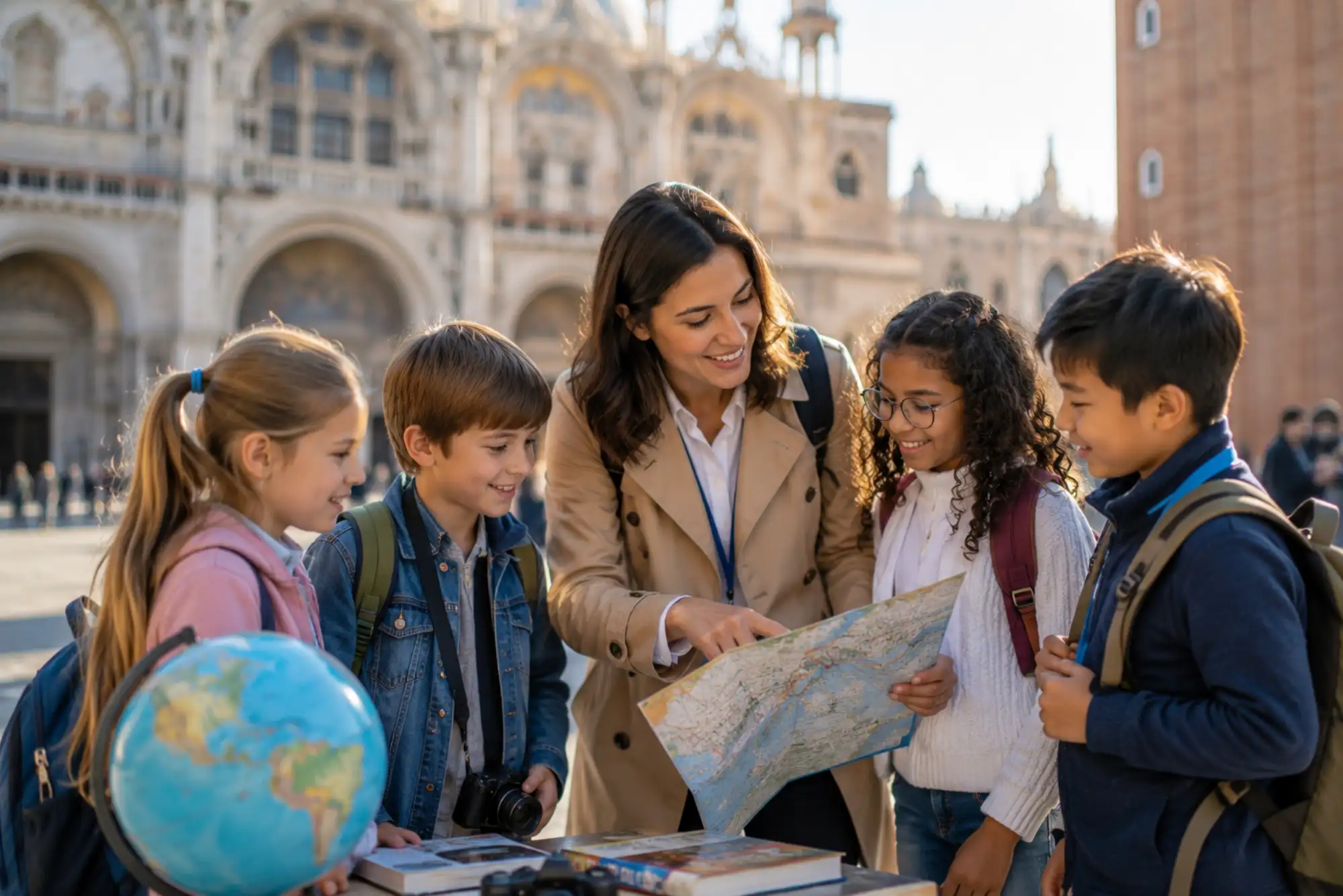
The concept of a travel tutor combines academic support with deep cultural mentorship in a way that conventional tutoring doesn’t attempt. It’s built on the recognition that for internationally mobile children, learning isn’t primarily about catching up on curriculum — it’s about developing the capacity to navigate an unfamiliar world confidently and curiously. A travel tutor works in that intersection, providing a knowledgeable, consistent adult presence who can meet children where they are and respond to what they actually need in the moment.
What this looks like in practice varies considerably depending on the child’s age, the destination, and the family’s circumstances. With younger children, it often involves guided exploration — using the new environment as a classroom, turning a market visit or a local celebration or a neighborhood walk into a structured learning experience that builds familiarity and reduces the anxiety of the unfamiliar. With older children and teenagers, it tends to involve more explicit cultural navigation: understanding social norms, managing identity questions, building the language competence needed for genuine connection rather than just functional communication.
Language as a Cultural Bridge, Not Just a Skill
Language learning is often treated as the primary challenge in international relocation, and it is significant. But the way language is typically taught — vocabulary lists, grammar exercises, formal conversation practice — misses something important. Language isn’t just a code to decode; it’s the medium through which culture expresses itself. The way a language structures time, formality, directness, and emotion reflects the values and assumptions of the people who use it.
A travel tutor who is genuinely fluent in both the target language and the culture it carries can teach in a fundamentally different way. They can explain not just what a phrase means but what it signals socially — when it would be used, by whom, in what kind of relationship. They can help children develop what linguists call pragmatic competence: the ability to say the right thing in the right way in a given social context. This is the dimension of language learning that makes the difference between a child who can technically communicate and one who can actually connect.
For families settling in the UAE — one of the world’s most multicultural urban environments — this layered approach to language and culture is especially relevant. The region’s extraordinary cultural diversity means that children are navigating multiple cultural registers at once: Emirati traditions, South Asian influences, Western expatriate communities, and much more. Resources that illuminate the cultural significance of religious and festive traditions can provide children with genuine context for the diversity they’re encountering daily, turning what might feel like bewildering difference into something comprehensible and interesting.
Building Confidence Through Guided Exploration
One of the consistent findings in cross-cultural psychology is that confidence in unfamiliar situations doesn’t come from reassurance — it comes from successful experience. Children who feel overwhelmed by a new cultural environment need to have the experience of navigating it competently, even in small ways, before their anxiety starts to ease. A travel tutor can engineer these experiences deliberately.
This might mean accompanying a child to a local market and coaching them through the interaction of buying something. It might mean visiting a place of cultural significance and providing the historical context that transforms a confusing building into a meaningful site. It might mean attending a local event together and helping the child interpret what they’re observing — why people are doing what they’re doing, what the occasion means to them, how to participate respectfully. Each of these experiences, when scaffolded by someone who genuinely understands the culture, builds a child’s sense that they can figure this place out.
The UAE offers extraordinary opportunities for this kind of engaged exploration. From traditional souks to contemporary art spaces, from waterfront fish markets to desert landscapes, the environment is genuinely rich with cultural texture that rewards close attention. Families navigating life in this region often discover that its most memorable cultural experiences happen not in tourist-facing venues but in the ordinary rhythms of daily life — the kind of engagement a knowledgeable guide makes accessible.
Food Culture as a Surprisingly Powerful Entry Point
Food rarely gets enough credit as a tool for cultural adaptation, but experienced educators working with internationally mobile families often cite it as one of the most accessible and emotionally resonant pathways into a new culture. Food is sensory, immediate, and deeply connected to identity and memory — both the child’s existing identity and the new cultural context they’re entering.
A child who learns to make a traditional dish from their new home country has done something more than acquired a recipe. They’ve engaged physically with a cultural tradition, learned something about the values and history embedded in that tradition, and created a positive emotional association with the culture they’re adapting to. Families in multicultural environments have particular access to this — the sheer variety of culinary traditions available in cities like Dubai means that food exploration can become a sustained, wide-ranging cultural education in its own right. For families interested in exploring the region’s diverse food culture, resources covering the sweets and culinary traditions of South Asian communities offer a window into the region’s rich subcultural diversity that goes well beyond what tourist guides cover.
Supporting Children’s Identity Through Transition
Perhaps the most delicate work a travel tutor does is helping children maintain a coherent sense of identity through a transition that can feel destabilizing. This is particularly true for children who have moved multiple times, who may have pieced together their identity from fragments of several different cultural experiences without having a strong “home” culture to anchor themselves in. These children — sometimes called “third culture kids” in the research literature — often have remarkable cross-cultural skills but also face particular challenges around belonging and self-definition.
A travel tutor working with these children doesn’t try to accelerate their adoption of the new culture at the expense of what they already carry. The goal is integration rather than replacement — helping children understand that their existing cultural knowledge and attachments are assets, not obstacles, and that adding new cultural competencies enriches rather than threatens their sense of self. This is a nuanced and important distinction that well-meaning but culturally less experienced adults sometimes miss.
Children who navigate international relocation well don’t tend to be the ones who adapted fastest in the conventional sense. They’re the ones who were given space to grieve what they left behind while being genuinely supported in discovering what their new environment has to offer. A skilled travel tutor holds both sides of that equation simultaneously.
Finding the Right Support for Your Family
The practical question for families considering this kind of support is how to find it. Not all tutors who work with internationally mobile families have the depth of cross-cultural training and personal experience to do this work well. It requires genuine cultural knowledge of the specific destination, experience with children at different developmental stages, and the interpersonal sensitivity to read what a particular child needs rather than applying a formula.
Families in Dubai and across the UAE are part of one of the world’s most dynamic communities of internationally mobile people — a context that has generated a genuine ecosystem of support services, from international schools with dedicated cultural integration programs to community organizations that connect expat families with shared experiences. Navigating this ecosystem effectively is itself a skill, and one that takes time to develop.
The investment in structured cultural support during a family’s early period in a new country tends to pay dividends well beyond the immediate adaptation challenge. Children who feel genuinely at home in more than one cultural context — who can move between different ways of being in the world with ease and genuine curiosity — carry that capacity with them throughout their lives. It shapes how they work, how they form relationships, how they respond to change, and how they understand the people around them. That’s not a small thing to give a child.
When the Transition Feels Hardest
There’s often a moment, several months into a relocation, when the initial excitement fades and the reality of being somewhere genuinely different settles in fully. For adults, this typically manifests as a flattening of mood and a sudden, sharp awareness of what was left behind. For children, it tends to show up as withdrawal, increased conflict at home, or a sudden and confusing loss of interest in the new environment they seemed to be engaging with just weeks before.
This is normal, and understanding that it’s a predictable stage rather than a sign that something has gone wrong is itself reassuring. A travel tutor who has accompanied families through this process before can provide the continuity of support that helps children move through it — acknowledging what’s hard without amplifying it, gently redirecting toward experiences that remind the child of what they’re gaining, and maintaining the structure of engagement that gives the adaptation process forward momentum.
For families considering this kind of support as part of a broader relocation strategy, the region’s resources extend into the practical details of settling in — from understanding how local communities are organized to navigating the cultural landscape of daily life in ways that feel genuinely informed. Knowing, for instance, what cultural experiences are available through events like Global Village can help families build a calendar of engaged exploration that keeps the adaptation process active rather than passive.
A Different Kind of Education
What a travel tutor ultimately provides is a different relationship to learning itself — one where curiosity about difference is cultivated rather than managed, where unfamiliarity is treated as interesting rather than threatening, and where a child’s growing cultural competence is recognized and celebrated as a genuine achievement. This is the kind of education that doesn’t appear on any transcript but shapes everything that follows.
The families who invest in this kind of support during international transitions often describe it, years later, as one of the most valuable things they did — not because it made the transition frictionless, but because it helped their children become the kind of people who know how to engage with a world that’s always going to be larger and more varied than any single cultural upbringing can prepare them for.
Related Reading: Challenging Hikes Near Portland for Experienced Adventurers


