
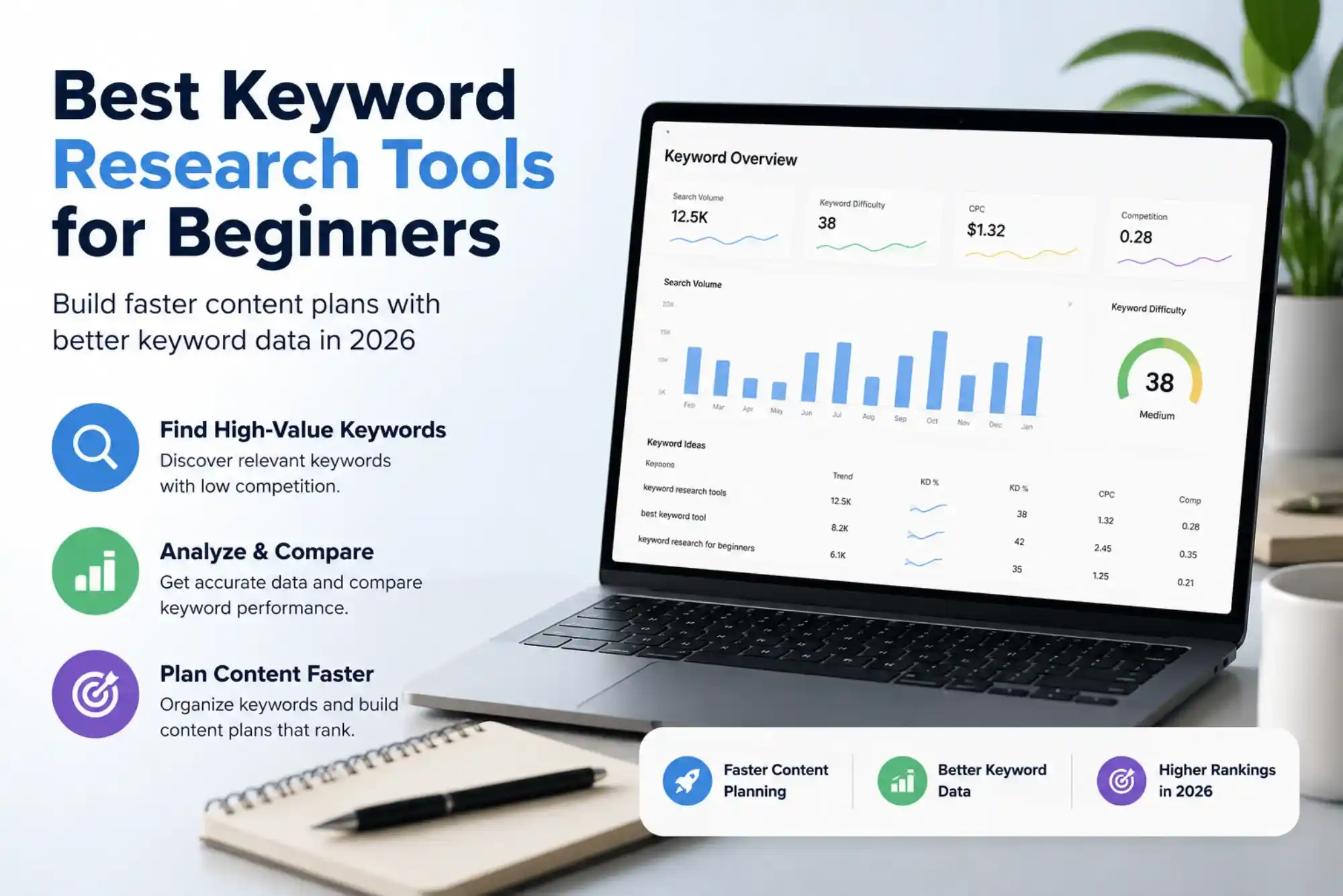
Search behavior has changed dramatically over the past two years. People are asking longer questions, using AI assistants for recommendations, and expecting more personalized answers from search engines. For beginners entering SEO in 2026, this shift creates both a challenge and an opportunity. The challenge is obvious: there are now hundreds of keyword tools competing for attention. The opportunity, however, is far more exciting. Modern keyword research platforms have become smarter, faster, and far easier to use than they were just a few years ago.
Today, even small businesses, freelancers, and first-time bloggers can create sophisticated content plans without hiring an expensive SEO agency. With the right keyword research tools, beginners can uncover low-competition opportunities, understand audience intent, and build articles that actually rank.


The difference between random publishing and strategic publishing often comes down to one thing: data quality. Better keyword data leads to better content decisions, and better decisions lead to faster growth.
Why Keyword Research Matters More in 2026
SEO is no longer just about ranking for short keywords with massive search volume. Search engines now prioritize topical relevance, user intent, authority, and contextual depth. This means content creators must think beyond simple phrases and understand how audiences search throughout their decision-making journey.
A beginner launching a website today has to compete in an environment shaped by AI-generated content, evolving search algorithms, and increasingly specific user queries. Keyword research tools help simplify that complexity by revealing what people actually search for, how difficult those keywords are to rank for, and which topics connect naturally together.
Businesses listed on platforms such as top business listing websites in the UAE are also becoming more SEO-aware. Local brands now rely heavily on keyword-driven content to increase visibility, attract leads, and compete online. That makes accurate keyword research more valuable than ever.
The New Generation of Beginner-Friendly SEO Tools
The biggest improvement in modern SEO software is usability. Earlier keyword platforms were often built for technical marketers who understood search metrics deeply. In 2026, many tools are designed specifically for creators, startup founders, small business owners, and independent publishers.
Instead of overwhelming dashboards, beginners now get visual topic maps, AI-assisted keyword clustering, search intent analysis, and simplified content recommendations. The learning curve has become much smaller.
Several platforms stand out because they balance affordability, accuracy, and simplicity exceptionally well.
Ahrefs Continues to Dominate for Search Insights
Ahrefs remains one of the most respected SEO platforms because of its massive keyword database and reliable competitive analysis. While advanced marketers still use it heavily, the platform has made noticeable improvements for beginners.
The keyword explorer now explains search intent more clearly, highlights traffic potential instead of focusing only on raw volume, and offers easier topic clustering. For someone building a content strategy from scratch, this helps reduce guesswork significantly.
One reason beginners gravitate toward Ahrefs is the ability to reverse-engineer successful websites. You can see which pages generate the most organic traffic for competitors and identify keyword gaps your own content can target.
For new publishers planning long-term SEO growth, this feature alone can save weeks of research.
Semrush Makes Content Planning Easier
Semrush has evolved from a technical SEO toolkit into a broader content marketing platform. Its keyword magic tool remains one of the strongest features for beginners who need structured ideas quickly.
Instead of manually brainstorming dozens of article concepts, users can generate keyword variations grouped by intent, question format, and topical relevance. This becomes especially useful when building editorial calendars.
Content marketers increasingly combine keyword research with audience behavior analysis. Semrush supports this trend by integrating SEO recommendations directly into content planning workflows.
Websites covering industries like software companies in Dubai or emerging tech services often benefit from these deeper insights because search competition in technology niches continues to intensify.
LowFruits Is Becoming a Favorite Among Beginners
One of the biggest frustrations for beginners is finding keywords they can realistically rank for. High-volume keywords are attractive, but they are often dominated by established domains with enormous authority.
LowFruits approaches keyword research differently. Instead of focusing primarily on volume, it helps users identify weak spots in search results. The platform scans search engine results pages and highlights opportunities where smaller websites already rank.
This approach is incredibly valuable for newer blogs and niche sites. Rather than chasing impossible terms, beginners can target realistic opportunities that generate traffic faster.
For creators with limited budgets, LowFruits also offers a pricing structure that feels less intimidating than enterprise-level SEO suites.
Google Keyword Planner Still Has a Place
Despite the rise of premium SEO software, Google Keyword Planner continues to be relevant in 2026. Many beginners underestimate its value because it lacks flashy features, but it remains one of the closest sources to actual Google advertising data.
Its strength lies in identifying commercial intent and seasonal demand patterns. Businesses running both SEO and paid campaigns often use Keyword Planner to align content strategies with advertising opportunities.
The platform works particularly well for local businesses and service providers trying to understand how customers search within specific regions or industries.
According to Google’s SEO Starter Guide, understanding search intent and building genuinely useful content remains central to sustainable rankings.
Surfer SEO Blends Keyword Research With Content Optimization
Traditional keyword research often stopped once users identified target phrases. Modern SEO requires a broader understanding of semantic relevance and topical depth. Surfer SEO helps bridge that gap.
Instead of only showing keywords, Surfer analyzes top-ranking pages and identifies patterns in headings, related phrases, structure, and content depth. Beginners can use this information to create articles that align more naturally with ranking expectations.
Its content editor simplifies optimization without requiring technical SEO expertise. For creators publishing frequently, this dramatically improves workflow efficiency.
Why Search Intent Is More Important Than Search Volume
One of the biggest mistakes beginners make is obsessing over high-volume keywords. In reality, a keyword with moderate traffic but strong intent often delivers better results.
Search intent generally falls into four categories:
- Informational searches seeking answers or guidance
- Navigational searches looking for specific brands or websites
- Commercial searches comparing products or services
- Transactional searches showing purchase intent
Modern keyword research tools increasingly prioritize intent analysis because search engines now evaluate whether content genuinely satisfies user expectations.
For example, someone searching “best keyword research tools for beginners” is likely comparing options and seeking educational guidance. A shallow article overloaded with affiliate links will struggle against detailed, trustworthy content.
AI Has Changed Keyword Research — But Not the Fundamentals
AI-powered SEO tools are everywhere in 2026. Many platforms now generate keyword suggestions, create topical clusters, and even draft outlines automatically. While these features can accelerate workflows, they do not replace strategic thinking.
The strongest content strategies still depend on understanding audience behavior, industry trends, and search psychology.
AI can identify patterns, but human insight determines which opportunities matter most.
That distinction is becoming increasingly important as search engines continue rewarding originality and expertise. Websites publishing generic AI-written content without real value are seeing diminishing visibility.
Experienced marketers now use AI-assisted keyword tools as research companions rather than decision-makers.
Building Faster Content Plans With Better Data
Efficient content planning starts with organization. Beginners who succeed with SEO typically follow a structured process instead of publishing randomly.
A modern workflow often looks like this:
- Identify a core topic or niche
- Research supporting keyword clusters
- Group keywords by intent
- Create pillar articles and supporting content
- Track rankings and refine strategy regularly
This method allows publishers to build topical authority more naturally. Instead of isolated articles competing against each other, the website develops interconnected expertise around specific subjects.
Businesses expanding digital visibility through regional platforms such as business and finance resources increasingly adopt this approach because it strengthens both organic rankings and audience trust.
What Beginners Should Avoid
Many new SEO users still fall into outdated practices that limit long-term growth. Keyword stuffing, publishing thin content, and targeting unrealistic keywords remain common mistakes.
Another major issue is relying exclusively on one tool. Every keyword platform uses different databases and methodologies. Cross-checking data from multiple sources usually produces stronger insights.
Beginners should also avoid creating content solely for algorithms. Search engines are becoming better at measuring engagement signals, expertise, and content usefulness.
Good SEO in 2026 feels increasingly similar to good publishing.
The Future of Keyword Research
Keyword research is evolving into audience intelligence. Instead of simply identifying phrases, marketers now analyze conversations, behavior patterns, topical relationships, and emerging search trends.
Voice search, AI assistants, visual search, and conversational queries are reshaping how users interact with information online. As a result, keyword tools are adapting by focusing more on context than isolated terms.
The best platforms in 2026 are not necessarily the ones with the largest databases. They are the ones that help creators understand why people search, what they expect, and how content can meet those expectations effectively.
For beginners, that shift is actually good news. Success no longer depends entirely on technical expertise or massive budgets. It depends more on clarity, consistency, and strategic use of quality data.
Conclusion
The best keyword research tools for beginners in 2026 are not simply data providers. They are strategic companions that help creators move faster, plan smarter, and publish with greater confidence.
Whether using Ahrefs for competitive analysis, Semrush for structured planning, LowFruits for low-competition opportunities, or Google Keyword Planner for search demand insights, the goal remains the same: understand what audiences genuinely want.
As SEO continues evolving, beginners who focus on relevance, intent, and content quality will outperform those chasing shortcuts. Better keyword data does not just improve rankings — it builds stronger digital authority, smarter content ecosystems, and sustainable online growth.
In a crowded digital landscape, thoughtful keyword research remains one of the most valuable skills any content creator can develop.
FAQs
What is the best keyword research tool for complete beginners?
LowFruits and Semrush are often considered beginner-friendly because they simplify keyword discovery and content planning without overwhelming users.
Are free keyword research tools still useful in 2026?
Yes. Tools like Google Keyword Planner and Google Trends still provide valuable search insights, especially for beginners working with limited budgets.
How many keywords should beginners target in one article?
Most articles perform better when focused on one primary keyword supported by several naturally related secondary keywords.
Can AI replace keyword research tools?
AI can assist with keyword discovery and topic generation, but human strategy and audience understanding remain essential for effective SEO.
Why is search intent important in keyword research?
Search intent helps determine what users expect from content, allowing creators to produce articles that align better with audience needs and search engine rankings.